Rio Grande Valley vs. Houston vs. Dallas: How Texas Flea Market Culture Changes Depending on Where You Are in the State
How parking, crowds, vendor types, food, and local culture shift across three major Texas flea market regions.
If you've ever visited a Texas flea market, you already know that the experience can vary wildly depending on where you are. Texas is enormous, and its flea market culture reflects that diversity in ways that go far beyond just what's on the tables. The Rio Grande Valley, Houston, and Dallas each have their own distinct version of what a flea market looks and feels like — shaped by local culture, climate, community habits, and the kinds of shoppers who show up every weekend. Whether you're searching for the best flea markets in Texas or just trying to figure out what to expect before your first visit, understanding these regional differences can save you time, set the right expectations, and help you get the most out of your trip.
Rio Grande Valley Flea Markets: Local, Affordable, and Community Driven
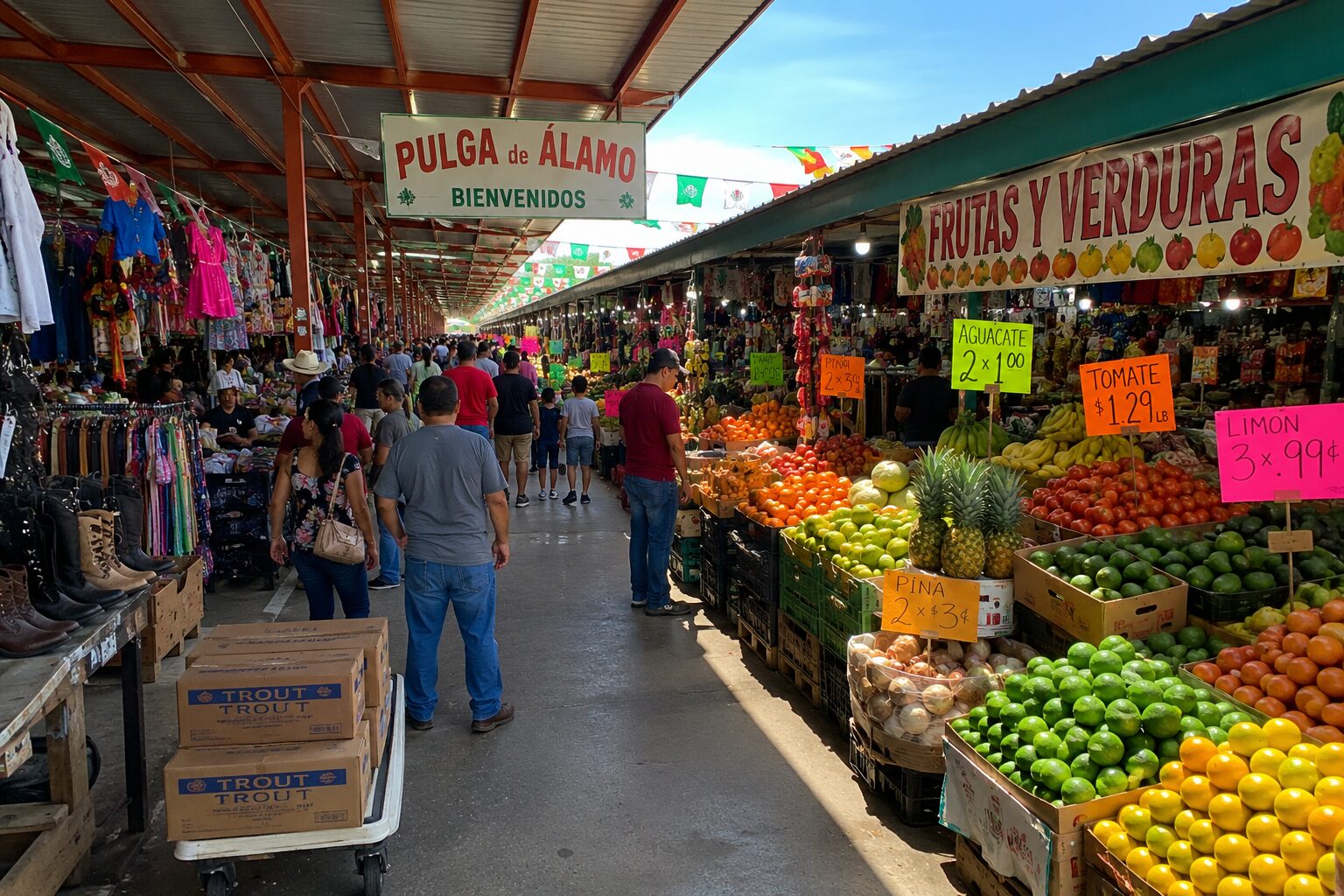
If there's one word that captures the Rio Grande Valley flea market experience, it's local. Markets like Pulga de Álamo in Alamo, the 77 Flea Market in Brownsville, and Mercadome Flea Market and Alamo Dance Hall draw shoppers who are largely from the surrounding communities, and the vendor mix reflects that. You'll find fresh produce priced well below grocery store rates, boots, clothing, tools, plants, piñatas, phone accessories, and Mexican candy — the kind of everyday goods that make these markets genuinely useful rather than just entertaining.
Fresh Produce Is a Real Draw
One of the most consistent highlights across Rio Grande Valley flea markets is the produce. At the 77 Flea Market, shoppers regularly note that fruit and vegetable prices beat local grocery stores by a noticeable margin. The same is true at Pulga de Álamo, where produce stands are frequently called out as a highlight, and at Mercadome, where early weekend arrival is recommended specifically to get the best selection before crowds thin it out. If you're the kind of shopper who wants to combine practical grocery runs with casual browsing, the Valley is the region that delivers most consistently on that front.
Covered Walkways and a Relaxed Pace
Many Valley markets have invested in covered walkways or partially indoor layouts that make the heat more manageable. Pulga de Álamo has undergone significant renovations in recent years, replacing older stalls with more structured, shop-like booths and covered walkways. The 77 Flea Market in Brownsville features covered walkways stretching over half a mile each. This matters a lot in South Texas, where summer heat is a real factor. The atmosphere at these markets tends to be relaxed and community-oriented, with a strong Spanish-speaking cultural presence that adds genuine character. Haggling is common and generally expected, parking is typically free or nearly free, and entry fees are minimal — often under a dollar.
Who Will Love It
Rio Grande Valley flea markets are ideal for shoppers who want affordable everyday goods, fresh produce, and an authentic local atmosphere without a lot of commercial noise. If you enjoy a slower pace, don't mind navigating large crowds on weekend mornings, and appreciate a market that feels like it exists for the community rather than for tourists, this is your region.
Houston Flea Markets: Entertainment Meets Shopping
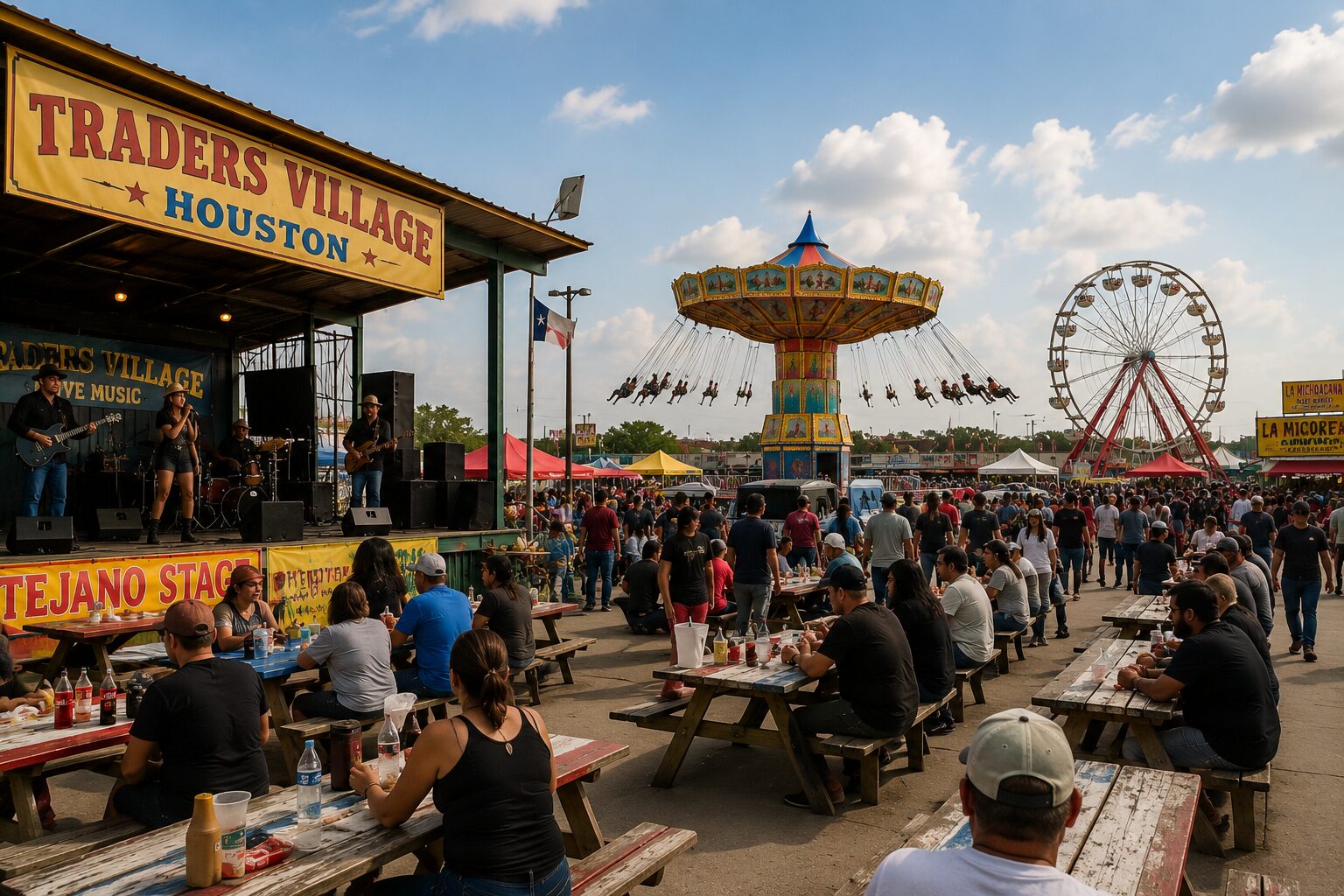
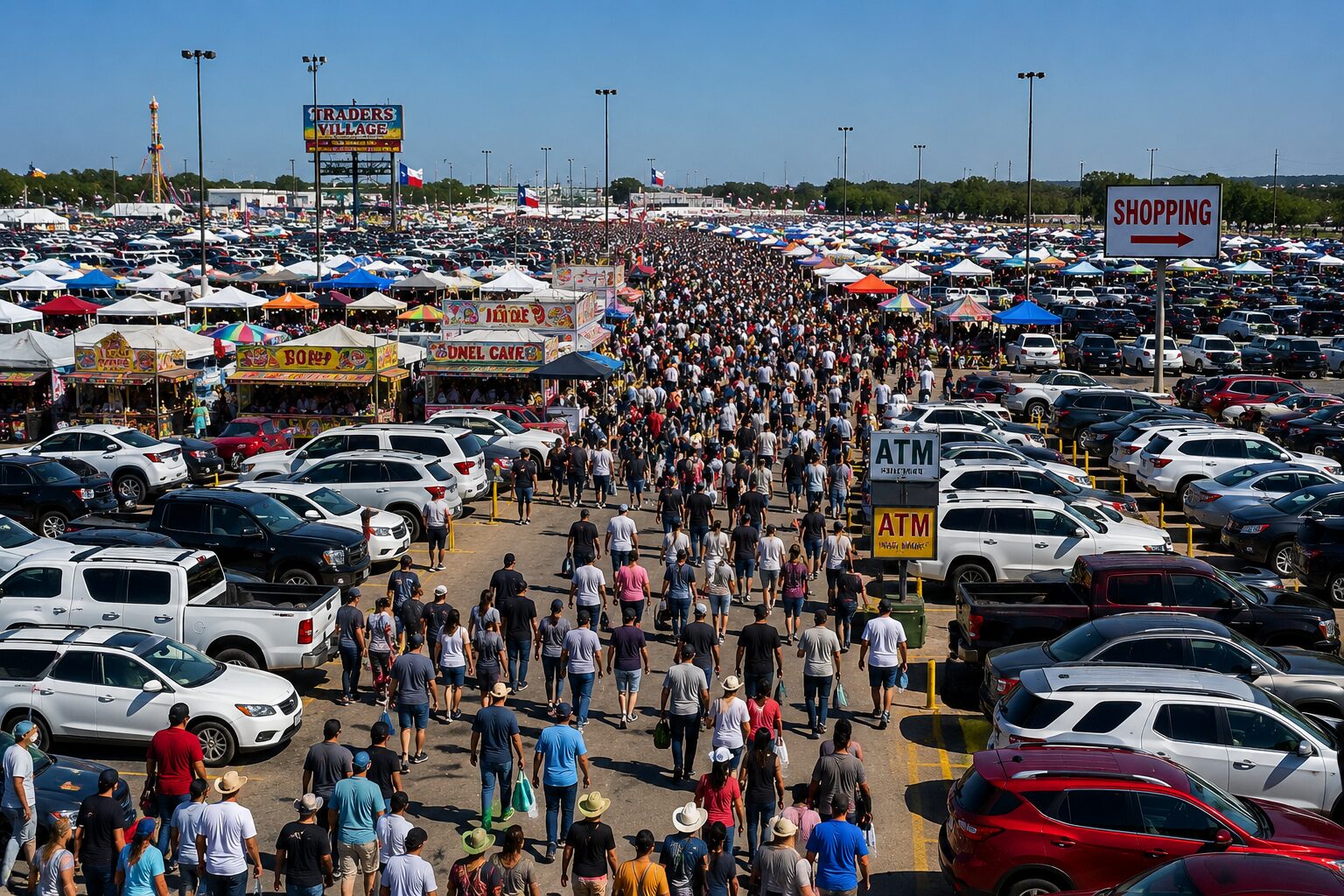
Houston-area flea markets operate on a different scale. Markets like Traders Village Houston, Tia Pancha, Mercado Sabadomingo, Sunny Flea Market, and Pearland Flea Market are large, sprawling operations that often feel less like a shopping trip and more like a full-day outing. The entertainment factor is real — carnival rides, live music, pony rides, dance halls, and food vendors serving everything from carnitas tacos to funnel cakes are woven into the experience in a way that sets Houston markets apart.
Shopping as an Event
At Traders Village Houston, all-day wristbands for carnival rides are available, making it a workable option for families with kids who need something to do between vendor rows. Mercado Sabadomingo on Airline Drive goes even further, with a live music venue, a dance hall, exotic animals, and amusement rides alongside the shopping. Tia Pancha offers pony rides and a dance area in addition to its food and vendor stalls. These aren't afterthoughts — they're central to why people show up. Many Houston flea market visitors describe the experience as feeling like a Mexican mercado or a weekend fair rather than a traditional swap meet.
Food Is a Serious Selling Point
Houston flea market food deserves its own mention. At Tia Pancha, carnitas tacos, barbacoa, elotes, and micheladas draw visitors who come specifically to eat. Sunny Flea Market on Airline Drive has specific taqueria vendors that come up repeatedly in positive reviews by name. Mercado Sabadomingo serves pupusas, churros, antojitos, and aguas frescas alongside its shopping. If you're planning a visit to any Houston-area market, budget time and appetite for the food — it's not an afterthought.
Practical Realities
Houston markets tend to be large enough that comfortable shoes and a full morning are genuine requirements. Parking is typically paid, ranging from around $2 to $6 depending on the market, and traffic can back up significantly on busy Sundays. Most vendors prefer cash, so coming prepared with bills is practical advice across the board. The best unique finds at markets like Traders Village tend to be toward the back of the grounds, away from the main entrance — a pattern worth keeping in mind as you plan your route.
Dallas Flea Markets: Indoor Bazaars and Mercado-Style Shopping
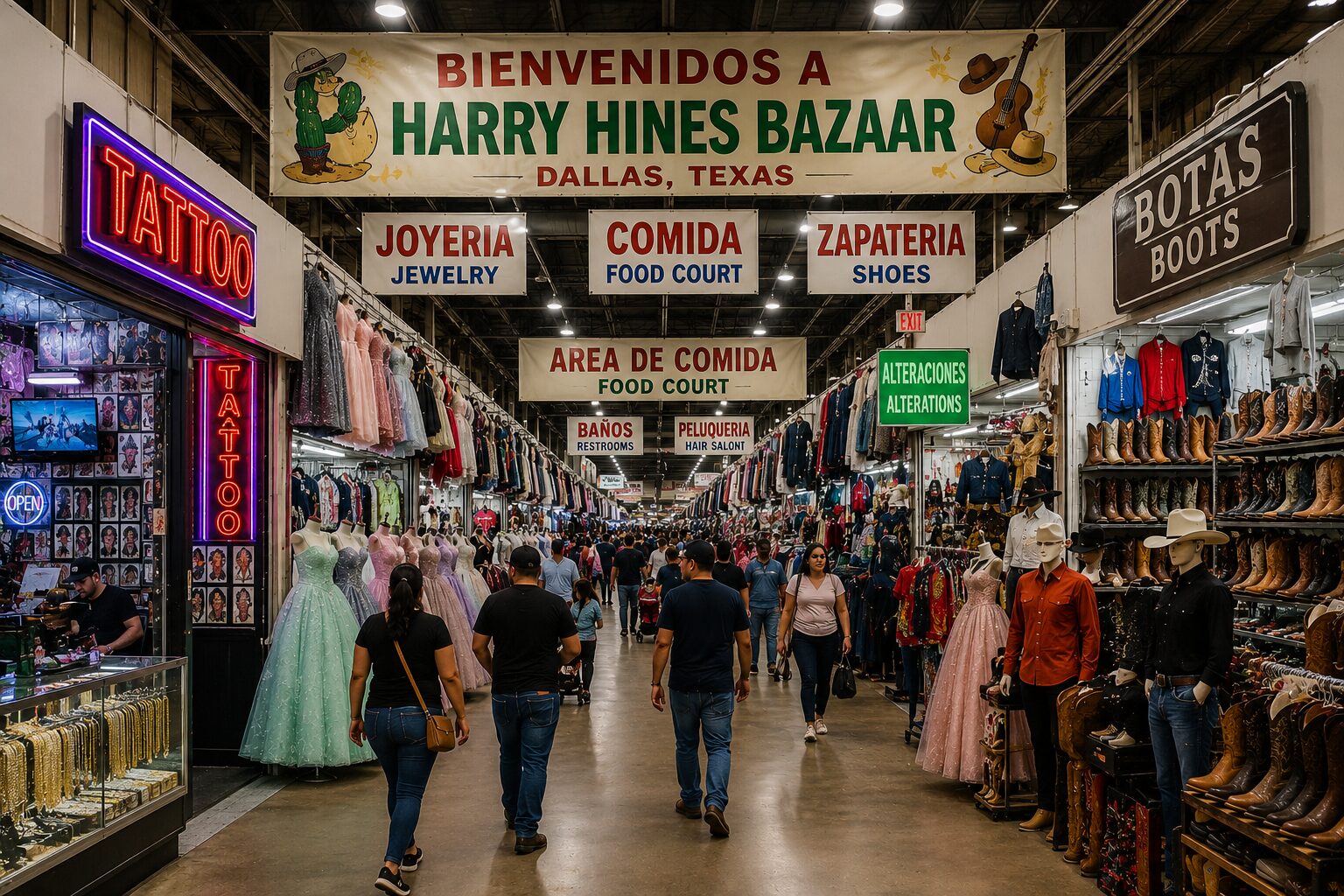
Dallas takes a noticeably different approach to flea market culture. Rather than large outdoor grounds with carnival rides and produce stands, many of the most popular Dallas-area markets operate as dense indoor bazaars housed in large commercial buildings. Garibaldi Bazaar on N Prairie Creek Rd is built inside a former K-Mart. Harry Hines Bazaar near 10788 Harry Hines Blvd functions like a dense, lively mercado with a layout that can be genuinely confusing to navigate. Bargin City Bazaar on N Westmoreland Rd spans multiple floors of vendors in a festive, family-oriented indoor setting.
More Than Just Shopping
What makes Dallas indoor bazaars distinctive is the range of services available alongside retail vendors. At Garibaldi Bazaar, you'll find tattoo shops, hair salons, eyebrow threading, shoe shining, alterations, and jewelry repair operating alongside clothing and food stalls. Harry Hines Bazaar includes herb and natural remedy vendors, a small arcade, and hair salons in addition to its western wear and quinceañera dress shops. Bargin City Bazaar houses window tinting, key cutting, and cell phone repair. These markets function closer to a one-stop destination than a traditional flea market, which appeals to shoppers who want to accomplish multiple errands in a single trip.
Weather, Parking, and Crowds
The indoor format offers a real advantage in terms of weather — central air conditioning at Harry Hines Bazaar and the enclosed layout at Garibaldi make summer visits far more comfortable than outdoor alternatives. The tradeoff is parking. Parking is the most consistently mentioned challenge at Dallas bazaars, with weekends drawing crowds that make finding a spot genuinely difficult. Regular visitors at Harry Hines recommend arriving on a Thursday or Friday to shop comfortably. Weekday mornings at Bargin City Bazaar are noticeably quieter than weekends. If you're visiting on a Saturday or Sunday, arriving early is the most reliable advice.
How Parking, Crowds, and Shopping Styles Change Across Texas
Comparing these three regions side by side reveals some clear patterns. In the Rio Grande Valley, parking is almost universally free, entry fees are minimal, and the shopping pace is relaxed and community-oriented. In Houston, you're paying for parking and often for entry, but you're getting a larger, more entertainment-focused experience in return. In Dallas, many markets offer free parking but the challenge is availability rather than cost — the indoor format draws dense crowds that make the lots chaotic on peak days.
Shopping style also shifts by region. Valley markets reward early arrivals who want the best produce and are willing to haggle across vendor rows. Houston markets reward shoppers who treat the visit as a full-day outing, arrive early to beat the heat and crowds, and come hungry. Dallas bazaars reward shoppers who want convenience, services, and a wide range of goods under one climate-controlled roof, and who are willing to navigate a dense, sometimes confusing layout to find what they need.
Which Texas Flea Market Region Is Right for You?
The answer depends on what you're actually looking for. If fresh produce, affordable everyday goods, and an authentic local atmosphere are your priorities, the Rio Grande Valley is hard to beat. Markets like the 77 Flea Market and Pulga de Álamo deliver consistently on those fronts, and the low entry costs make them easy to visit regularly.
If you're planning a family outing and want shopping to be part of a larger experience — with food, rides, live music, and a festive atmosphere — Houston-area markets like Traders Village, Mercado Sabadomingo, or Tia Pancha are built for exactly that. Plan for a full day, bring cash, and don't skip the food.
If you want the convenience of an indoor market with a wide range of services, formal wear, food courts, and specialty retailers all under one roof, Dallas bazaars like Garibaldi or Harry Hines offer something closer to a Latin mercado experience than a traditional flea market. They're particularly well-suited for shoppers who want to combine errands with browsing, or who are looking for quinceañera dresses, western wear, or authentic Latin food in a single stop.
Texas Flea Market Culture Is Not One Thing
Texas flea market culture is genuinely regional, and that's what makes exploring it worthwhile. The Rio Grande Valley offers community-rooted markets where fresh produce and everyday goods are the draw. Houston scales that experience up into something closer to a weekend event, with entertainment and food as central features. Dallas takes a different direction entirely, moving the whole operation indoors and adding services that blur the line between flea market and shopping center.
There's no single "best flea market in Texas" because the best one depends entirely on what you're looking for. What's consistent across all three regions is that showing up with cash, wearing comfortable shoes, and arriving early will serve you well no matter where in the state you land. Beyond that, the experience is yours to discover — and in Texas, there's a lot of it to find.