
Texas Flea Markets Ranked by Food
Where the tacos, elotes, aguas frescas, barbecue, and street food atmosphere are worth the drive alone.
The Best Texas Flea Markets Aren't Just About Shopping Anymore
There's a moment that happens at the right Texas flea market — usually somewhere between the third taco stand and the sound of a norteño band warming up — when you realize you're not really here to shop. You came for the boots or the tools or maybe a vintage find, but what's keeping you here is the smell of carnitas hitting a hot comal, a styrofoam cup of agua fresca sweating in your hand, and the general feeling that this is exactly where you're supposed to be on a Saturday morning.
That's the thing about flea markets in Texas. The food isn't an afterthought. At the best ones, it's the whole point.
Across the state — from the Rio Grande Valley to Dallas, from Houston's Airline Drive corridor to the Hill Country — Texas flea markets have developed food cultures that rival dedicated street food festivals. Some markets have become all-day destinations specifically because of what's cooking. Others are worth the drive even if you never buy a single item off a vendor's table.
This guide breaks down which Texas flea markets deliver the strongest food experiences, how they compare across regions, and what to expect when you show up hungry.
Houston's Flea Market Food Scene: A Corridor Worth Exploring
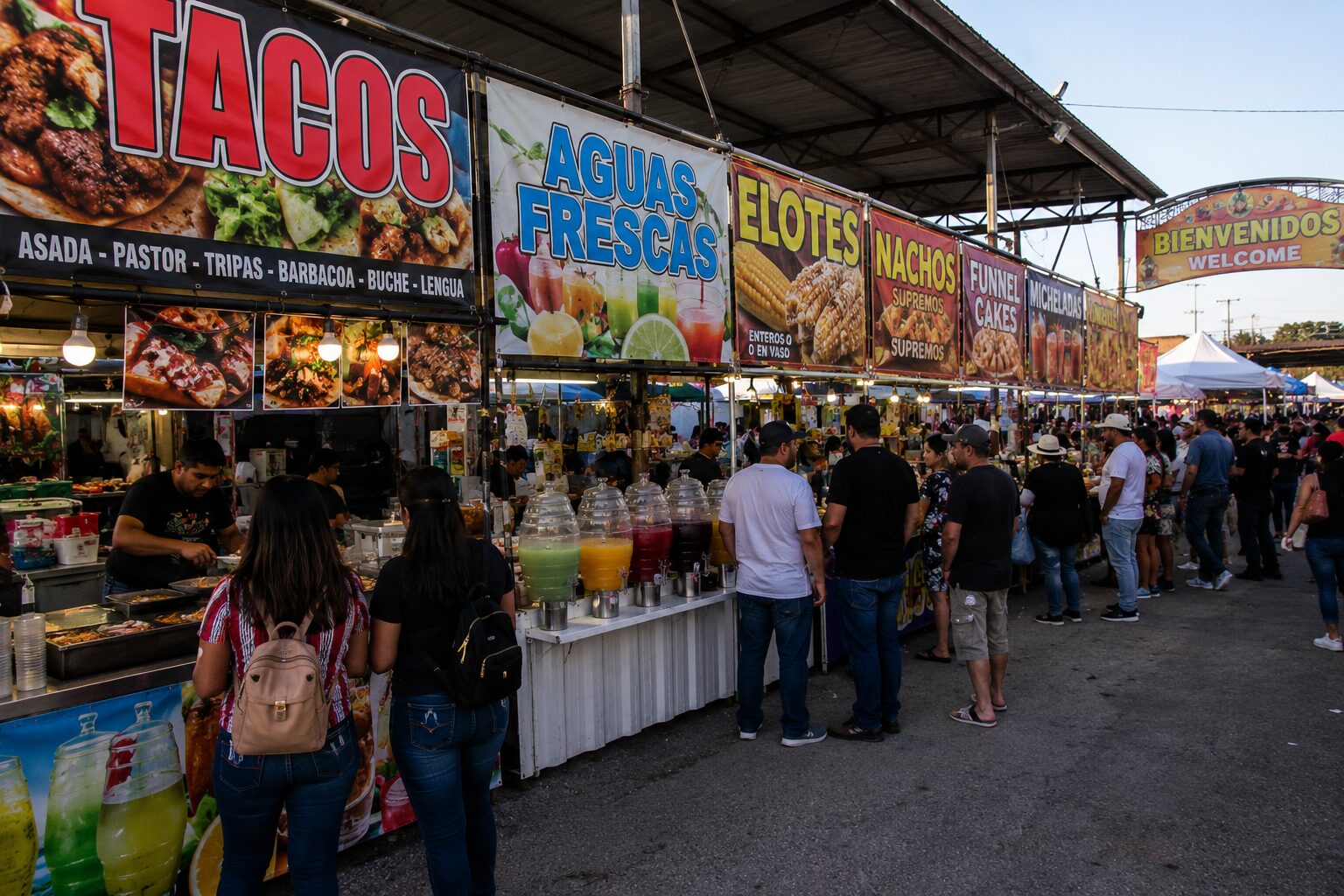
If you want to understand how food and flea market culture intersect in Texas, start in Houston. The city's north side — particularly along Airline Drive — has developed a cluster of outdoor markets where the food experience is genuinely competitive with dedicated taquerias.
Tia Pancha: Where People Drive Just to Eat
At Tia Pancha on 8801 Airline Dr, food isn't a side attraction — it's the reason many visitors show up. Carnitas tacos, barbacoa, elotes, micheladas, aguas frescas, and fresh fruit are all consistently mentioned by shoppers who describe making the drive specifically to eat. The shopping is real — clothing, boots, tools, jewelry, and services like key cutting and phone repair fill out the vendor rows — but the food anchors the whole experience.
What makes Tia Pancha work as a food destination is the atmosphere around the eating. Live music plays on weekends, there's a dance area, and the overall vibe is described repeatedly as feeling like a slice of Mexico. That's not marketing language — it's what regulars actually say. When food, music, and community overlap the way they do here, a flea market stops being a shopping errand and becomes a full Sunday outing.
Sunny Flea Market and Mercado Sabadomingo: Two More Reasons to Head North
A few miles away, Sunny Flea Market on Airline Drive draws visitors who name specific food vendors — Taqueria Rositas and 4 Brothers Tacos come up repeatedly — which is a meaningful signal. When shoppers remember vendor names, not just "there was good taco food," it means the quality is consistent enough to build a following. Tacos, micheladas, fruit cups, menudo, carnitas, and aguas frescas are all well-represented here, and the market's atmosphere leans heavily toward a Mexican mercado feel rather than a typical American swap meet.
Mercado Sabadomingo, also on Airline Dr, takes things a step further. The food stalls serve tacos, pupusas, elotes, churros, micheladas, and a wide range of antojitos, but the market also has a live music venue, a dance hall, amusement rides for kids, and exotic animals on-site. It feels more like a fair than a flea market, and that's genuinely meant as a compliment. If you're visiting with family and want a full day's worth of activity built around food and atmosphere, Sabadomingo on a Sunday delivers that.
Pearland Flea Market: Birria and Trompo South of the City
South of Houston, the Pearland Flea Market on N Main St has built a food reputation around birria tacos, trompo tacos, aguas frescas, fruit cups, corn in a cup, and weekend BBQ. These aren't generic descriptions — trompo tacos specifically require a vertical spit setup, which signals a vendor who's invested in doing it right. The market is large, family-friendly, and worth arriving early on Sundays when crowds and traffic both build quickly.
Dallas Flea Markets and Indoor Bazaars: The Elote-at-the-Entrance Experience
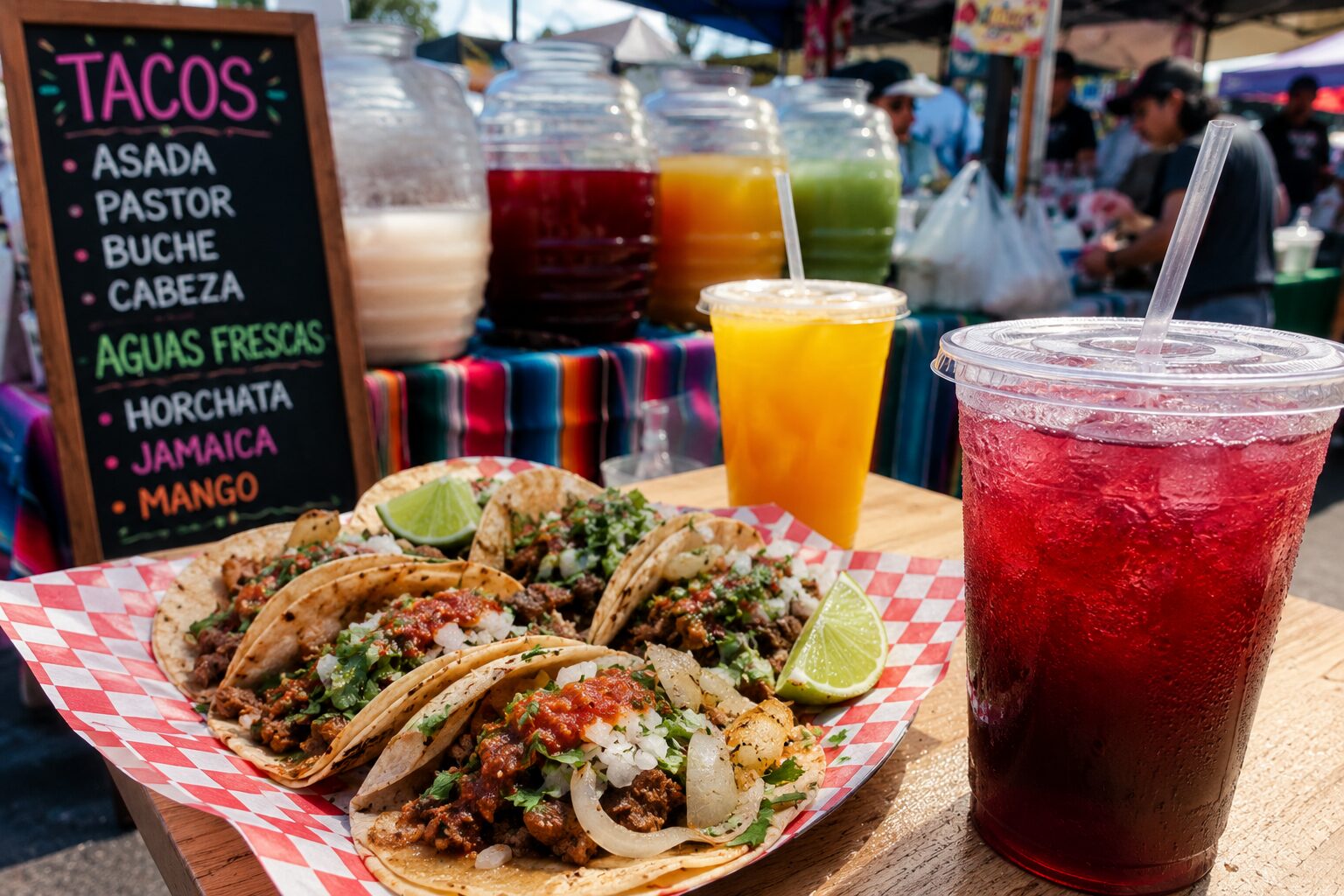
The flea market food culture in Dallas looks different from Houston's outdoor corridor. Here, the strongest food experiences tend to be concentrated inside large indoor bazaars that have developed into full mercado environments — air-conditioned, dense, and culturally immersive.
Garibaldi Bazaar: Elote Rows and a Full Food Court
Garibaldi Bazaar, built inside a former K-Mart on N Prairie Creek Rd, is best known for the rows of elote vendors that line the front entrance. That image — walking in and immediately being greeted by a corridor of corn — tells you something about how food is prioritized here. The food court draws consistent praise for aguas frescas, mangonadas, churros, pupusas, molcajetes, and fresh fruit cocktails. Visitors regularly describe it as the closest thing to being in Mexico without leaving Dallas, and the food is a big part of why.
Harry Hines Bazaar: Authentic Restaurants Inside a Flea Market
Harry Hines Bazaar near 10788 Harry Hines Blvd takes a slightly different approach. Rather than just food stalls, it houses what shoppers describe as authentic Mexican and Salvadoran restaurants alongside the usual fresh fruit stands and aguas frescas. Roasted elote at the entrance is a consistent mention. The indoor, air-conditioned environment makes it a more comfortable food stop in summer than most outdoor Texas flea markets, and the density of the mercado layout means you're never far from something worth eating.
Bargin City Bazaar: Fresas con Crema and Shrimp Tostadas
At Bargin City Bazaar on N Westmoreland Rd, the food specificity in shopper reviews stands out. Elote, fresas con crema, quesadillas, shrimp tostadas, aguas frescas, and chamoy treats are called out by name — and that level of detail from repeat visitors suggests the food quality is genuinely memorable. The market spans multiple floors and leans festive and family-oriented, with the food vendors drawing regulars who come back as much for the snacks as the shopping.
The Rio Grande Valley: Where Flea Market Food Culture Runs Deepest
If any region of Texas has fully merged flea market culture with food culture, it's the Rio Grande Valley. The markets here — in Alamo, Brownsville, Mission, and Palmview — treat fresh produce and street food as central features, not add-ons.
Pulga de Álamo and Mercadome: The Valley's Twin Giants
Pulga de Álamo in Alamo is one of the largest flea markets in the Rio Grande Valley, and its food scene reflects that scale. Three separate areas feature live Spanish music with seating and dance floors, and the food options lean heavily toward Mexican dishes, raspas, and snacks. The produce stands are a consistent highlight — shoppers regularly praise freshness and low prices on fruits and vegetables. The market has undergone significant renovations, and the overall experience feels more structured than many outdoor Texas swap meets.
Just down the road, Mercadome Flea Market and Alamo Dance Hall draws consistent crowds for fresh produce at prices well below grocery store rates, and on weekends the live bands, food vendors, and dance area create a noticeably livelier atmosphere. The combination of practical grocery shopping and festive food culture is something the Valley does better than almost anywhere else in Texas.
The 77 Flea Market in Brownsville: Mangonadas and Breakfast Plates
The 77 Flea Market in Brownsville offers one of the more complete food lineups of any Texas flea market — tacos, aguas frescas, elote, mangonadas, pizza, and breakfast options are all available. The breakfast angle is worth noting: markets that serve morning food well tend to reward early arrivals, and arriving early at the 77 Flea Market is strongly recommended anyway for cooler temperatures and better deals. The food alone draws repeat visitors here, which is a meaningful endorsement.
Palmview Pulga: Wednesday Nights and Fresh Produce
Palmview Pulga Flea Market near Mission operates on a schedule that includes Wednesday evenings — one of the few flea markets in Texas with a consistent nighttime market. Wednesday nights draw the biggest crowds, with live music and food vendors serving tacos, elotes, churros, espiro papas, tamales, and Mexican sweets. The fresh produce selection is a genuine draw, with shoppers picking up blackberries, dragon fruit, and strawberries at prices that consistently beat local grocery stores.
San Antonio Flea Markets: Tejano Music and Turkey Legs
San Antonio's flea market food culture has its own distinct flavor, shaped by Tejano music, regional comfort food, and a strong community of longtime regulars.
Flea Mart on the Poteet Jourdanton Fwy: Cold Beer and Live Music
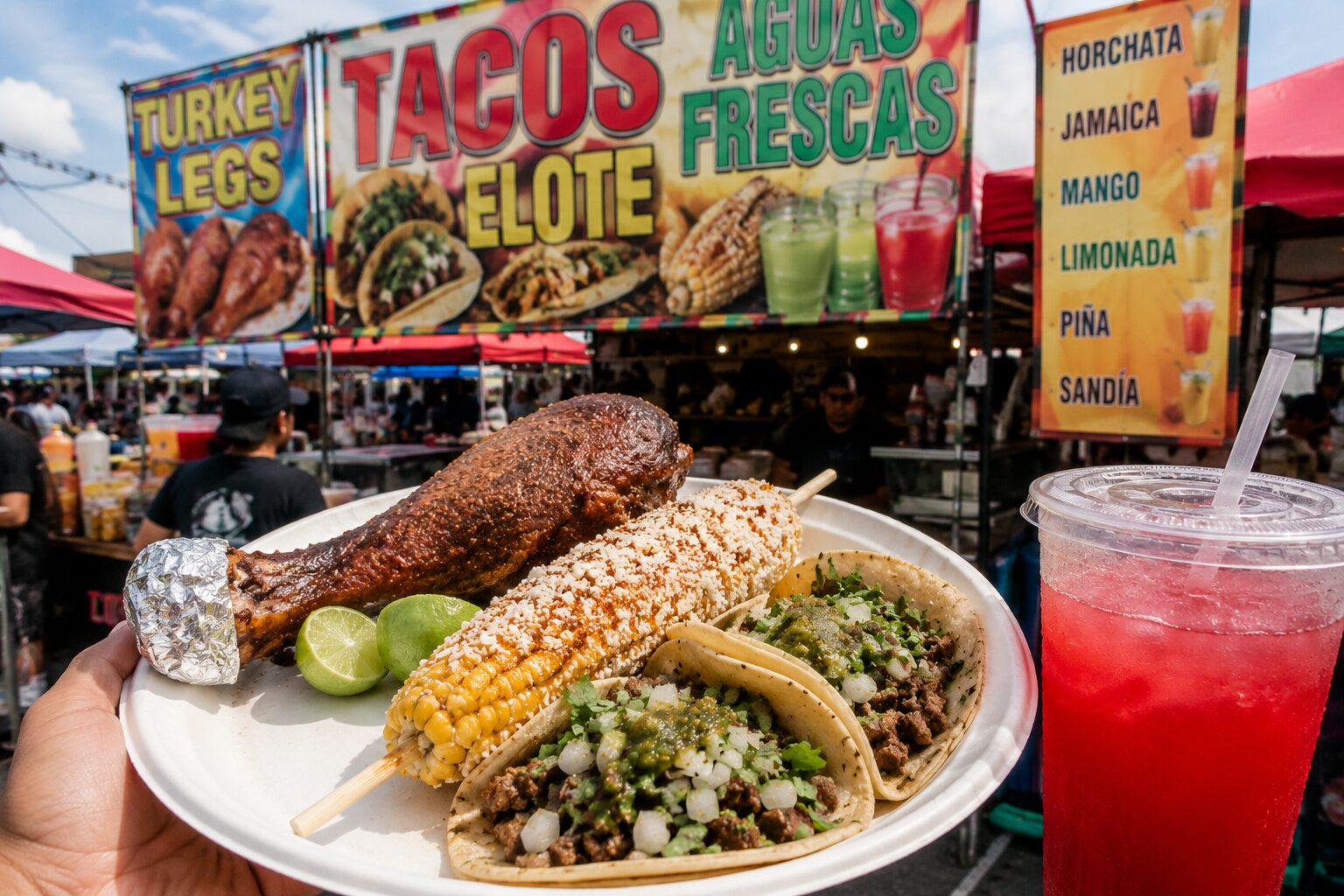
The Flea Mart draws a loyal Sunday crowd with a combination that's hard to argue with: live regional and Tejano music, cold beer for around $3, tacos, elote, turkey legs, and burgers. The turkey leg is a detail worth pausing on — it's a festival food that signals this market understands it's competing with entertainment, not just other shopping options. Many vendors aren't fully set up until closer to noon, so this is one of the few Texas flea markets where arriving later actually works in your favor.
Mission Open Air Market: Community-Driven and Locally Sourced
Mission Open Air Market on San Antonio's south side leans more toward community atmosphere than festival spectacle, but the food vendors serving tacos, fruit, snacks, and drinks are a consistent part of what keeps regulars coming back. The market operates Wednesdays, Saturdays, and Sundays, and the Sunday crowd reflects how deeply embedded it is in the local routine.
Beyond the Metro: Regional Texas Flea Markets With Standout Food
La Pulga Seagoville: The Best Street Food at Any Dallas-Area Flea Market
La Pulga Seagoville on US-175 near Dallas deserves its own category. Visitors consistently highlight it as having the most extensive selection of authentic Mexican street food of any market in the area — tacos de tripas, carnitas, barbacoa, menudo, churros with cajeta, mangonadas, and fresh coconut water cracked open on the spot. That last detail — fresh coconut water cracked to order — is the kind of thing that separates a market with good food from one with genuinely great food. Entry runs around $5, and the food alone justifies it.
Fredericksburg Trade Days: BBQ, Beer Garden, and Hill Country Charm
Fredericksburg Trade Days in the Hill Country offers a completely different food register. Mini donuts, BBQ, roasted corn, brisket-topped baked potatoes, and a beer garden with live music give this monthly market a relaxed, social feel that's more craft fair than mercado. It runs on the third weekend of each month, and the food options are plentiful enough to fuel a full day across five barns and outdoor vendor spaces. For shoppers who want antiques and handmade goods alongside their food experience, this is the Hill Country answer.
Larry's Old Time Trade Days in Winnie: Funnel Cakes and Cracklings
Larry's Old Time Trade Days near Winnie leans into carnival-style comfort food — funnel cakes, fresh cracklings, kettle popcorn, BBQ, and lemonade. It's a monthly market with a loyal following, and the food is part of why regulars treat it as a genuine event rather than a routine errand. Scooter rentals are available for those who need them, which is a practical detail that also signals how seriously the market takes the full-day visitor experience.
The National Flea Market in Lubbock: Brisket Tacos and Kool-Aid Pickles
The National Flea Market on Clovis Rd in Lubbock has developed a food identity that's distinctly West Texas — brisket mini tacos, freeze-dried candy, sweet bread from Slaton Bakery, and kool-aid pickles are among the standouts mentioned by regulars. It's a Tex-Mex food culture filtered through a Lubbock lens, and the specificity of what shoppers remember eating here suggests the food vendors have built real followings.
Trade City in Bowie: Wood-Fired Pizza and Fried Pies
Trade City Second Monday Trade Days in Bowie offers one of the more eclectic food lineups in North Texas — street tacos, roasted corn, fried pies, kettle popcorn, wood-fired pizza, and fresh pork rinds. The wood-fired pizza at a monthly flea market is an unexpected detail that reflects how seriously some Texas markets take their food vendor mix. Saturday is the busiest day with the most food options available.
Outdoor vs. Indoor: How the Setting Shapes the Food Experience
One of the clearest divides in Texas flea market food culture is between outdoor markets and indoor bazaars. They offer genuinely different experiences, and knowing which you prefer helps narrow down where to go.
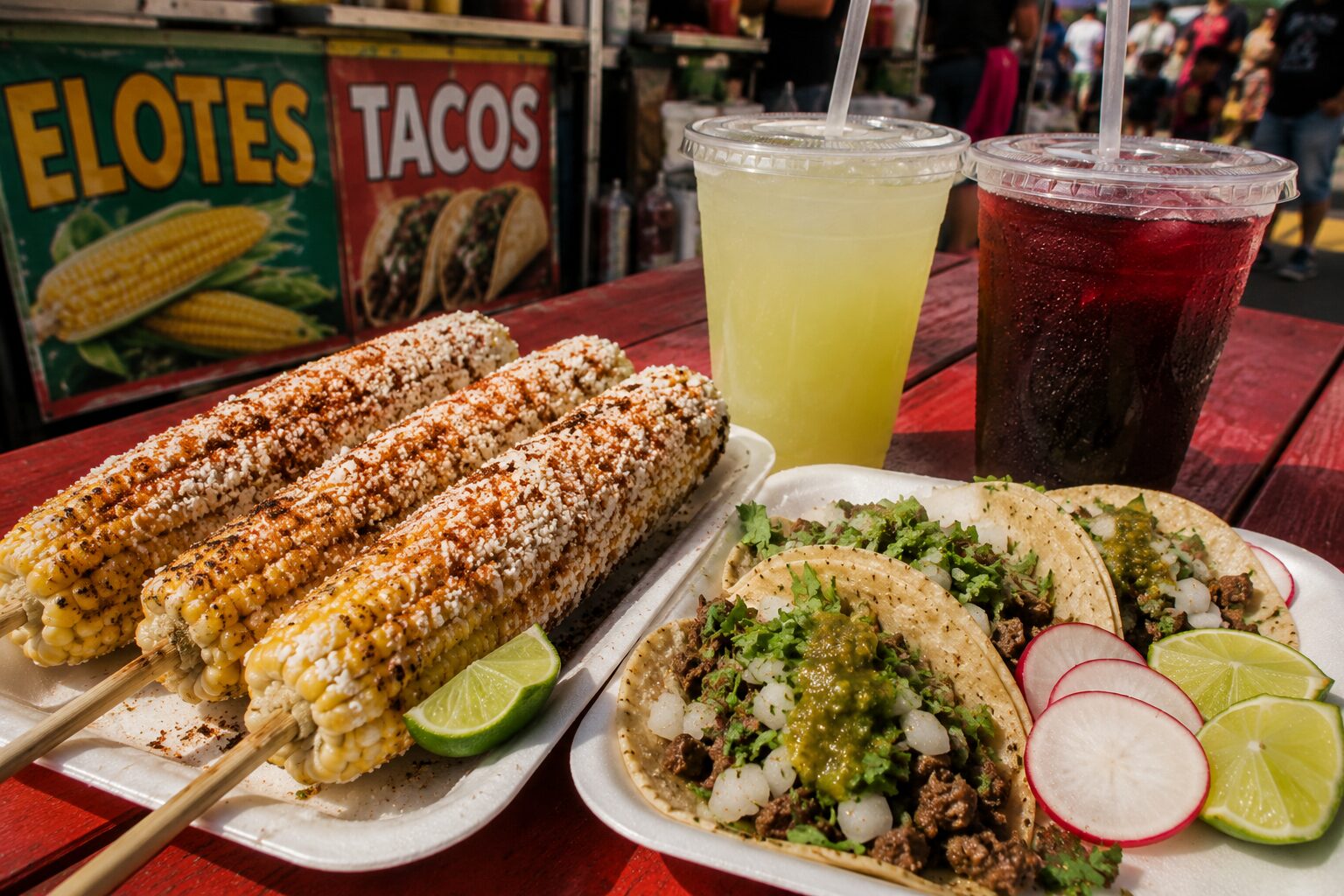
Outdoor markets — like Tia Pancha, Sunny Flea Market, La Pulga Seagoville, and the Rio Grande Valley pulgas — tend to have food that feels more spontaneous and street-level. Vendors set up wherever the foot traffic flows, and the food is often cooked in the open air, which adds to the sensory experience. The tradeoff is weather: summer heat in Texas is real, and arriving early at any outdoor market is consistently the most practical advice across the board.
Indoor bazaars — like Garibaldi, Harry Hines, and Bargin City in Dallas — offer air conditioning and a more concentrated food court experience. The food is excellent, but the atmosphere is denser and more mall-like. These markets tend to be more comfortable in summer and are worth visiting on weekday mornings if you want to eat without navigating weekend crowds.
Practical Tips for Eating Your Way Through Texas Flea Markets
- Bring cash. Nearly every food vendor at every Texas flea market prefers or requires it. ATMs are available at many markets but can have lines on busy Sundays.
- Arrive early. The best food vendors sell out. The best parking spots fill up. The coolest temperatures are in the morning. Early arrival solves all three problems at once.
- Plan for Sunday crowds. At most Texas flea markets, Sunday draws the most vendors, the most food options, and the most people. Saturday is often calmer but has fewer stalls open.
- Wear comfortable shoes. This applies to the shopping, but it also applies to the eating — the best food vendors at large markets like Pulga de Álamo or Traders Village are often deep inside the grounds, not near the entrance.
- Budget for food separately. If you're going to a market like Tia Pancha or La Pulga Seagoville specifically for the food, treat it like a restaurant outing with a shopping bonus, not the other way around.
FAQ: Texas Flea Market Food Culture
Which Texas flea market has the best tacos?
La Pulga Seagoville near Dallas is consistently cited for the most extensive authentic Mexican street food, including tacos de tripas, carnitas, and barbacoa. Tia Pancha in Houston and the 77 Flea Market in Brownsville are strong contenders as well.
Do Texas flea markets have food beyond Mexican street food?
Yes, though Mexican and Tex-Mex food dominates. Fredericksburg Trade Days offers BBQ and brisket-topped baked potatoes. Larry's Old Time Trade Days in Winnie has funnel cakes, cracklings, and kettle popcorn. Bussey's near San Antonio has snow cones and burgers. Trade City in Bowie serves wood-fired pizza and fried pies.
Are Texas flea market food vendors cash only?
Most are. A few markets have ATMs on-site, but bringing small bills is the most reliable approach at any Texas flea market.
What's the best time to visit a Texas flea market for food?
Mid-morning on Sundays gives you the most vendors and food options, though crowds build quickly. Arriving by 9 or 10 AM is the sweet spot at most markets.
Are Texas flea markets good for families with kids?
Many are. Markets like Traders Village, Mercado Sabadomingo, Tia Pancha, and La Pulga Seagoville all have amusement rides or kids' activities alongside food vendors. The food variety — fruit cups, churros, elotes, aguas frescas — tends to work well for families.
Which indoor Texas flea markets have the best food?
Garibaldi Bazaar and Harry Hines Bazaar in Dallas are the strongest indoor options for food, with full food courts, authentic restaurants, and elote vendors at the entrance. Bargin City Bazaar is also worth visiting for its specific food offerings.
Conclusion: Matching the Market to Your Appetite
Texas flea markets aren't a monolith, and neither is the food culture inside them. The right market depends on what kind of experience you're after.
If you want the deepest, most authentic Mexican street food experience, La Pulga Seagoville near Dallas and Tia Pancha in Houston are the two markets most consistently described as worth driving for specifically to eat. The Rio Grande Valley — particularly Pulga de Álamo, Mercadome, and the 77 Flea Market — offers the strongest combination of fresh produce and street food culture anywhere in the state.
For a festival-like atmosphere with food, music, and family activities all in one place, Mercado Sabadomingo and Sunny Flea Market in Houston deliver that on Sundays. Flea Mart in San Antonio adds Tejano music and cold beer to the equation.
If you want something more relaxed — good food without the Sunday crush — Fredericksburg Trade Days in the Hill Country offers a beer garden, BBQ, and a curated shopping experience that feels genuinely different from the metro markets.
And if you're in Dallas and want air conditioning with your elotes, Garibaldi Bazaar and Harry Hines Bazaar are the indoor answers to what the outdoor Houston markets do in the open air.
Wherever you go, bring cash, wear comfortable shoes, and show up hungry. In Texas, the flea market food is rarely an afterthought — and at the best ones, it's the whole reason you came.